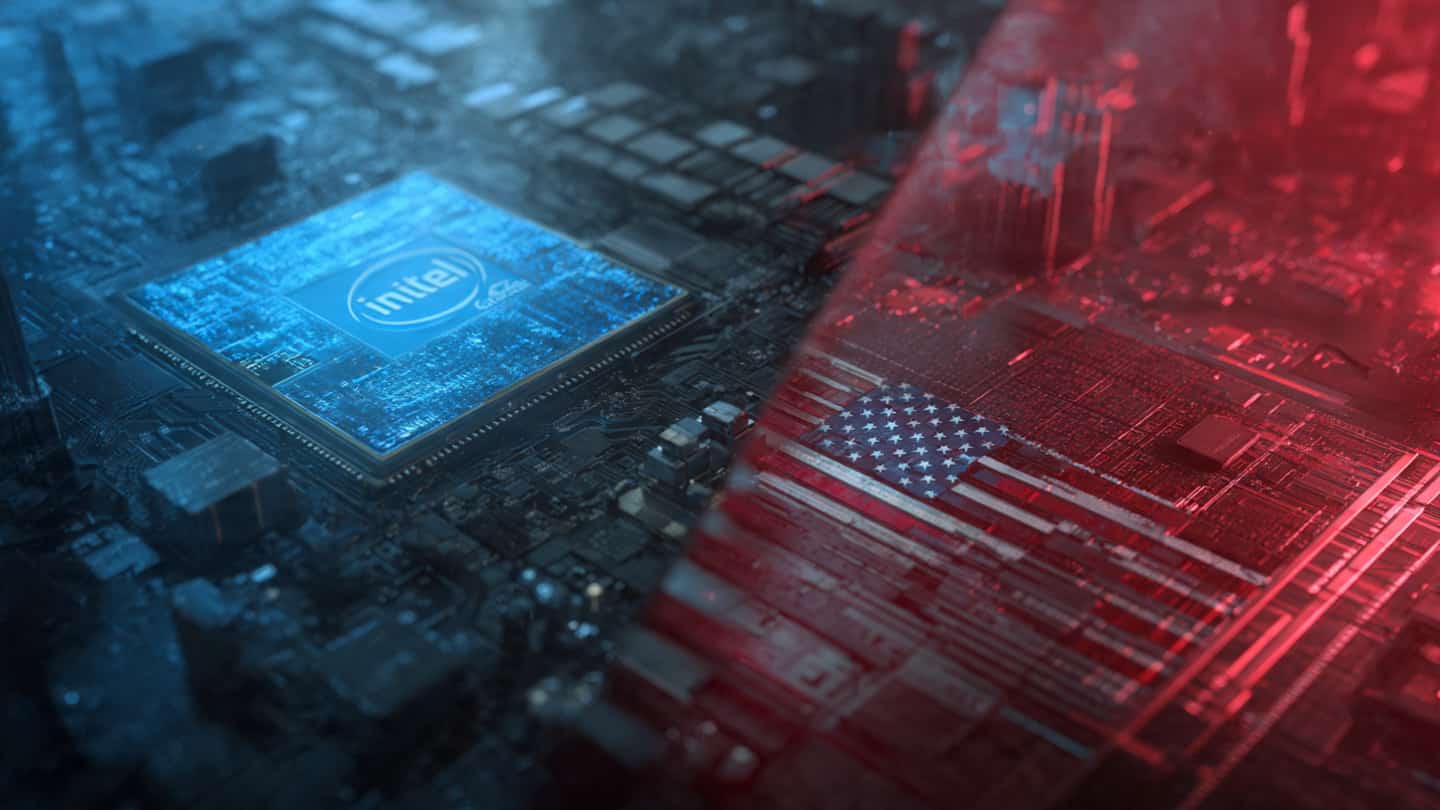
The U.S. government’s deepening partnership with TSMC is reshaping the semiconductor landscape—creating opportunities for America’s chip ambitions but also raising serious concerns about Intel’s long-term position.
As billions in CHIPS Act subsidies and federal support flow toward Taiwan’s TSMC, analysts warn that Intel may be losing its historic role as America’s primary semiconductor champion.
What Triggered the Shift?
Over the past year, Washington has accelerated efforts to expand advanced chip production on U.S. soil.
But instead of relying solely on Intel, the government has increasingly turned to TSMC—the world’s most advanced chip manufacturer—to build leading-edge 3nm and 2nm fabs in Arizona.
The pivot became clear when:
TSMC secured major CHIPS Act funding
U.S. defence agencies expressed interest in TSMC’s advanced nodes
Apple, Nvidia, and AMD publicly committed future production to TSMC’s U.S. fabs
This growing reliance on TSMC has fuelled speculation that the U.S. now views the Taiwanese giant as a more reliable partner for advanced-node manufacturing than Intel.
Why Intel Is Feeling the Pressure
Intel has long been America’s iconic semiconductor leader.
But several challenges have weakened its footing:
Delayed node transitions
Intel has struggled for years to keep pace with TSMC at 7nm, 5nm, and below.
IDM 2.0 execution risks
Intel’s plan to revive its manufacturing dominance requires flawless execution—and the market isn’t convinced yet.
Foundry competitiveness concerns
TSMC continues attracting global clients, while Intel Foundry Services (IFS) is still building credibility.
Rising reliance on foreign manufacturing
The U.S. wants advanced chips built domestically—but without delays. TSMC currently offers the fastest path.
The result is a growing perception that TSMC—not Intel—is now the backbone of America’s semiconductor strategy.
Why the U.S.–TSMC Partnership Matters Globally
TSMC operating fabs inside the U.S. fundamentally shifts the balance of global chip production.
Key impacts include:
more secure access to advanced chips for U.S. defence and AI sectors
Reduced geopolitical risk tied to Taiwan
increased competition for Intel’s foundry ambitions
a stronger supply chain for Apple, Nvidia, AMD, and Qualcomm
For Washington, diversifying away from Taiwan while still leveraging TSMC’s cutting-edge technologies is a strategic necessity.
For Intel, it’s a direct challenge.
What It Means for the Semiconductor Industry
The closer alignment between Washington and TSMC is likely to accelerate:
next-gen AI chips made in America
faster deployment of 3nm and 2nm technologies
increased competition in U.S.-based advanced manufacturing
pressure on Intel to deliver on its IDM 2.0 roadmap
If Intel falls further behind, the U.S. may increasingly depend on TSMC for its most advanced defence, AI, and HPC chips—something unthinkable a decade ago.
What Comes Next for Intel?
Analysts highlight 2025–2026 as make-or-break years for Intel.
The company must:
Prove it can deliver competitive advanced nodes
Scale Intel Foundry Services quickly
secure large anchor clients
complete its Ohio and Arizona fabs without further delays
If Intel’s 18A and future nodes succeed, the company could regain momentum.
If not, TSMC may solidify its dominance—even on U.S. soil.
Recommended Reading – Intel and TSMC: A Game-Changing Semiconductor Alliance in the Making?
My Take: How Experts Interpret This Shift
Analysts and engineers see this moment as a strategic crossroads:
Bullish experts argue Intel can still rebound if its roadmap executes
Bearish analysts believe TSMC’s technological lead is widening too fast
Neutral observers note that the U.S. simply wants redundancy—not favouritism
But the sentiment is clear:
Intel’s future now depends on proving—quickly—that it can still compete at the cutting edge.
Explore more global tech insights at apnakal.com/market
As the U.S. strengthens ties with TSMC, Intel faces one of the most uncertain periods in its history. Whether this shift marks a temporary realignment or a long-term transition in America’s semiconductor loyalty will depend on Intel’s execution in the next two years.
Stay tuned for updates. What’s your view on Intel’s future? Share your thoughts below.